An Atmospheric Illumination Model for Computer Graphics

The following page shows some example images from the work I have done on simulating the transport of light through participating media with a specific application to outdoor atmospheric environments.

The model can be used to simulate various conditions found in the real atmosphere, such as a clear blue sky and the appearence of fog of various densities and altitudes. The geometry of a constant density plane-parallel atmosphere is used, with restrictions to take into account the size and shape of the terrestrial atmosphere. A single source of parallel light is also used to represent the illumination from the Sun. The model is a physical one based on the single-scattering of light by particles constituting the atmosphere.

The illumination model was tested on a scene containing a simple air-field, with runway and auxilliary buildings, and also with some background relief. The scene was constructed in physical units (km) so that realistic values for the scattering properties of the atmosphere could be used in the calculation. Air/fog densities are represented in terms of a meteorological quantity called the visual range, which is the distance equivalent to 98% of the attenuation of light, meaning that the intensity of light reaching the eye, reflected from an object x km away, is only 2% of the original when it has travelled through a medium with a visual range of x km. As a result the object is just beginning to blend into the background.

In all images the height of the atmosphere is kept at 8.4 km and the view point is 3 m above the ground, unless otherwise stated.


Example images

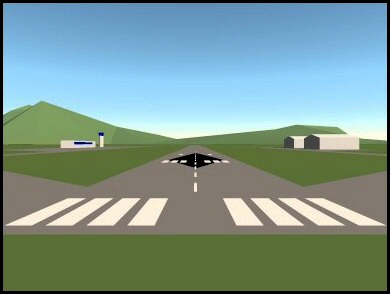
The first image was computed for the case of clear air (visual range 250 km). The hills in the background are further away than one would think. The peak on the left is 4.5 km distant. Also, the length of the runway is 500 m, the tower on the left is 13 m high at a distance of 250 m, while the buildings on the right are approximately 165 m away. Note the blue colour of the sky and the gradual whitening towards the horizon. The hills also have a slight blue cast on them.

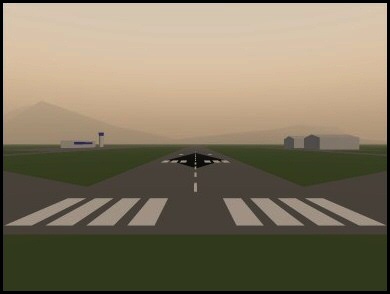
This second image shows a view of the scene rendered with fog (height 1 km, visual range 5 km). The hills are just beginning to be invisible while the overall brightness of the scene has diminished greatly. Compare this with the next image which also contains fog of the same density but different height.

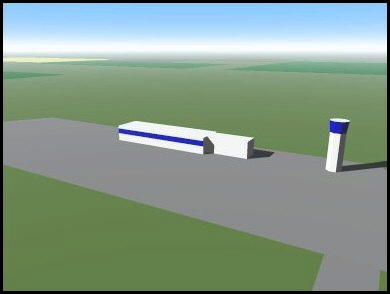
The final image shows a different view looking out towards the horizon. The layer of fog is not very dense (visual range 5 km) and is relatively low-lying (height 80 m). The height of the view-point in this view is 30 m above the ground. The view gives some idea of the effect of the fog along the horizon.


So you want to know more?

If you wish to read all the gory details about how I created these (and other) images my master's dissertation [2145 KB] is available for your perusal. The appendices contain source code listings, just in case you find yourself at a loose end on a Sunny Sunday afternoon and fancy something really spicy to read!


Copyright © 1995 John Irwin